SCHOTT
Developing an integrated Performance Marketing Unit for agile, measurable marketing performance
Clarity drives impact
A clear service promise positions the Performance Marketing Unit as a relevant partner for the Business Units.
Agility boosts effectiveness
Short content cycles enable faster learning and quicker adaptation.
Integration pays off
An interdisciplinary setup with clear interfaces increases efficiency and the ability to execute.
Measurability makes the difference
Marketing’s value contributions are made visible through data and support strategic decision-making.
SCHOTT, a global technology group for speciality glass, glass-ceramics and polymers with around 17,500 employees across 30 markets, had a Performance Marketing Unit with no clear integration into the Business Units and no reliable measurement of success. Together with SCHOTT, DAYONE developed a marketing organisational design: a new role model, service promise and agile work cycles. Result: a PMU with clear roles, KPIs and a roadmap that makes its value contributions for the Business Units transparent.
- Client
- SCHOTT · around 17,500 employees, 30 markets
- Industry
- Speciality glass, glass-ceramics and polymers (Chemicals/Materials)
- Services
- Stakeholder analysis · Service proposition design · Role model development · Organisational design · Workshop facilitation
- Outcome
- A service promise, agile cycles and a service blueprint make the PMU’s value contributions to the Business Units transparent
Starting point
SCHOTT’s Performance Marketing Unit was a function-driven unit without integration with the Business Units, with unclear measurement of success and capacity bottlenecks that slowed the teams down.
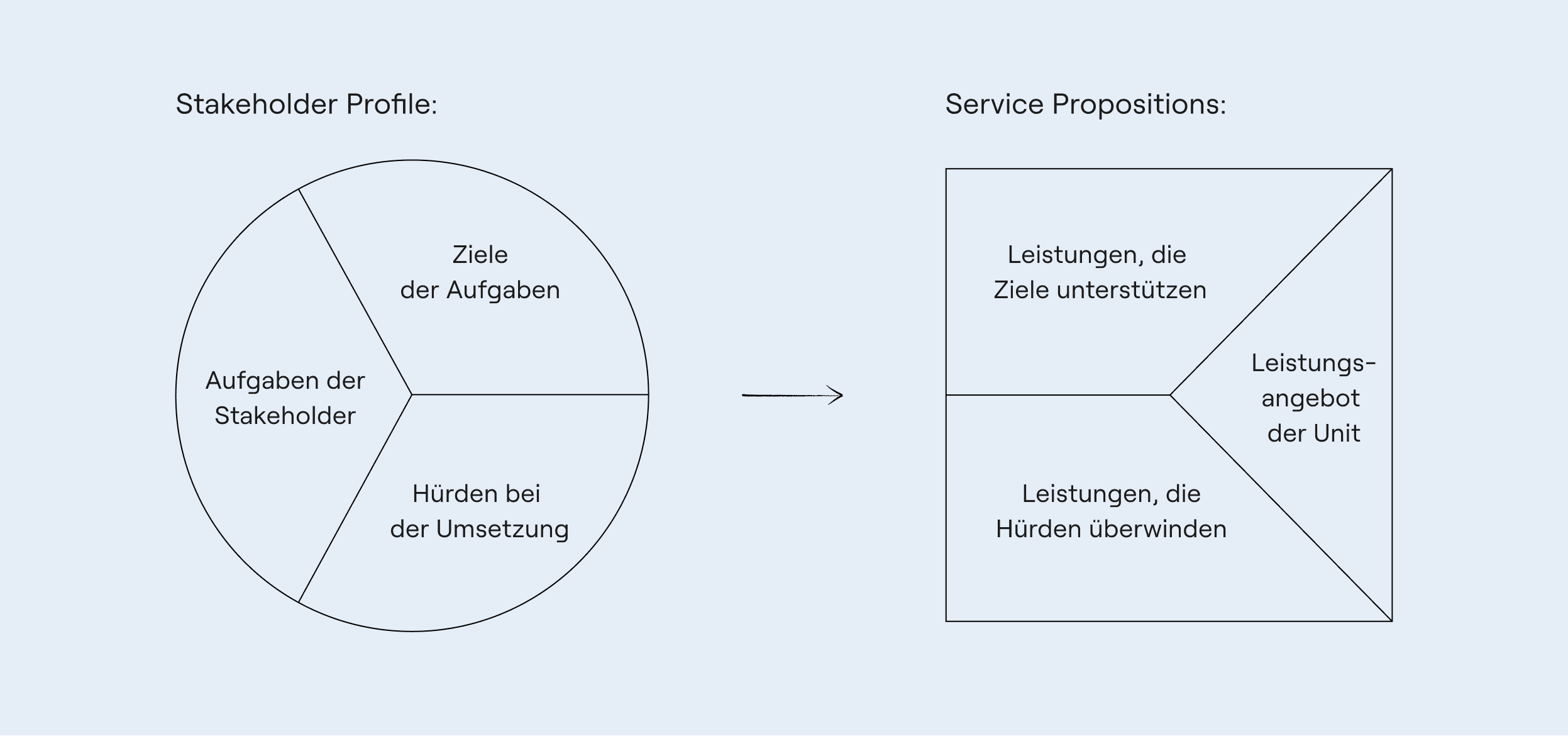
A clear value proposition positions the Performance Marketing Unit as a strategic partner
With a stakeholder-centred value proposition, the Performance Marketing Unit became a clearly positioned Consulting, Coordination & Execution unit within Marketing. Today, it addresses the Business Units’ key goals and hurdles, creating clear added value: greater acceptance across the organisation, higher collaboration efficiency, and a clear contribution to business success.
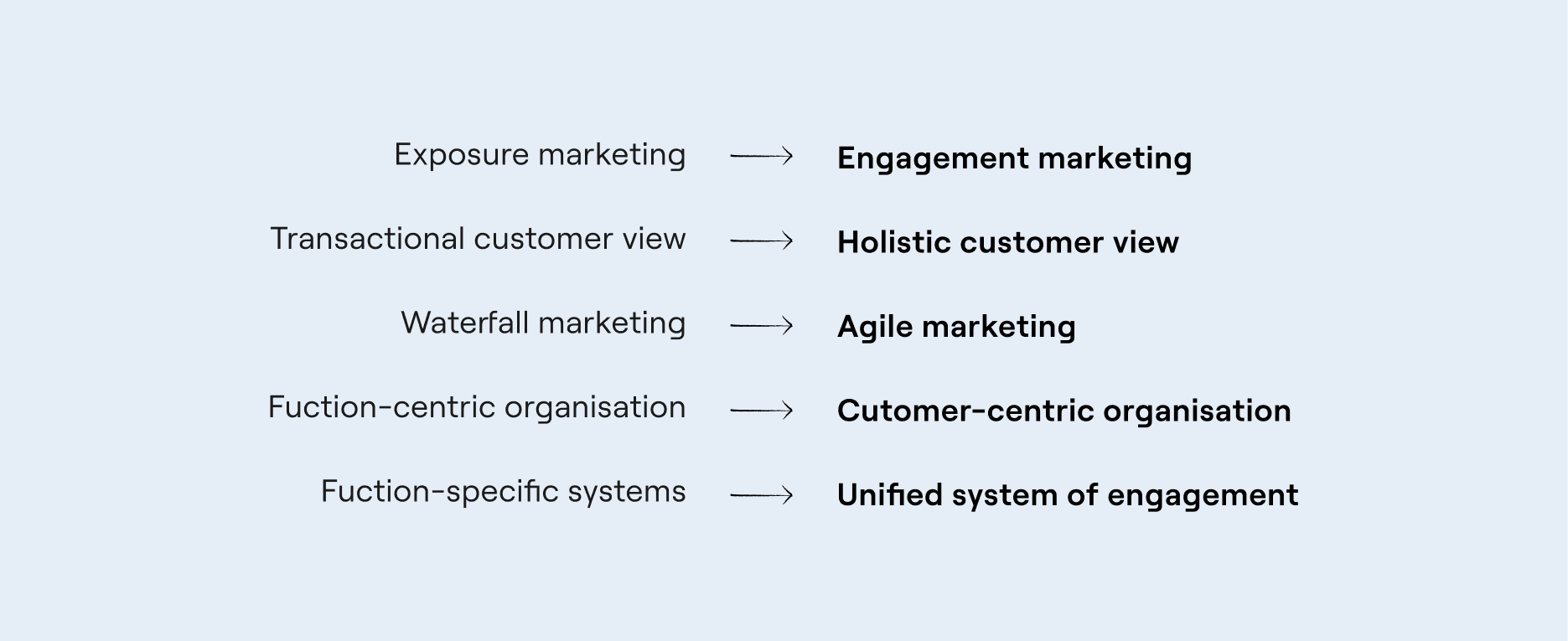
Marketing organisation design: Integrated ways of working break down silos and increase impact
Instead of working in isolation, co-creative workshops built a shared understanding between Corporate Marketing and the Business Units. This led to an integrated operating model that breaks down silos, pools resources and makes collaboration significantly easier. For SCHOTT, that means consistent brand communication across all key touchpoints from LinkedIn and Google to the website, resulting in a clearer brand image and greater impact from every single activity.
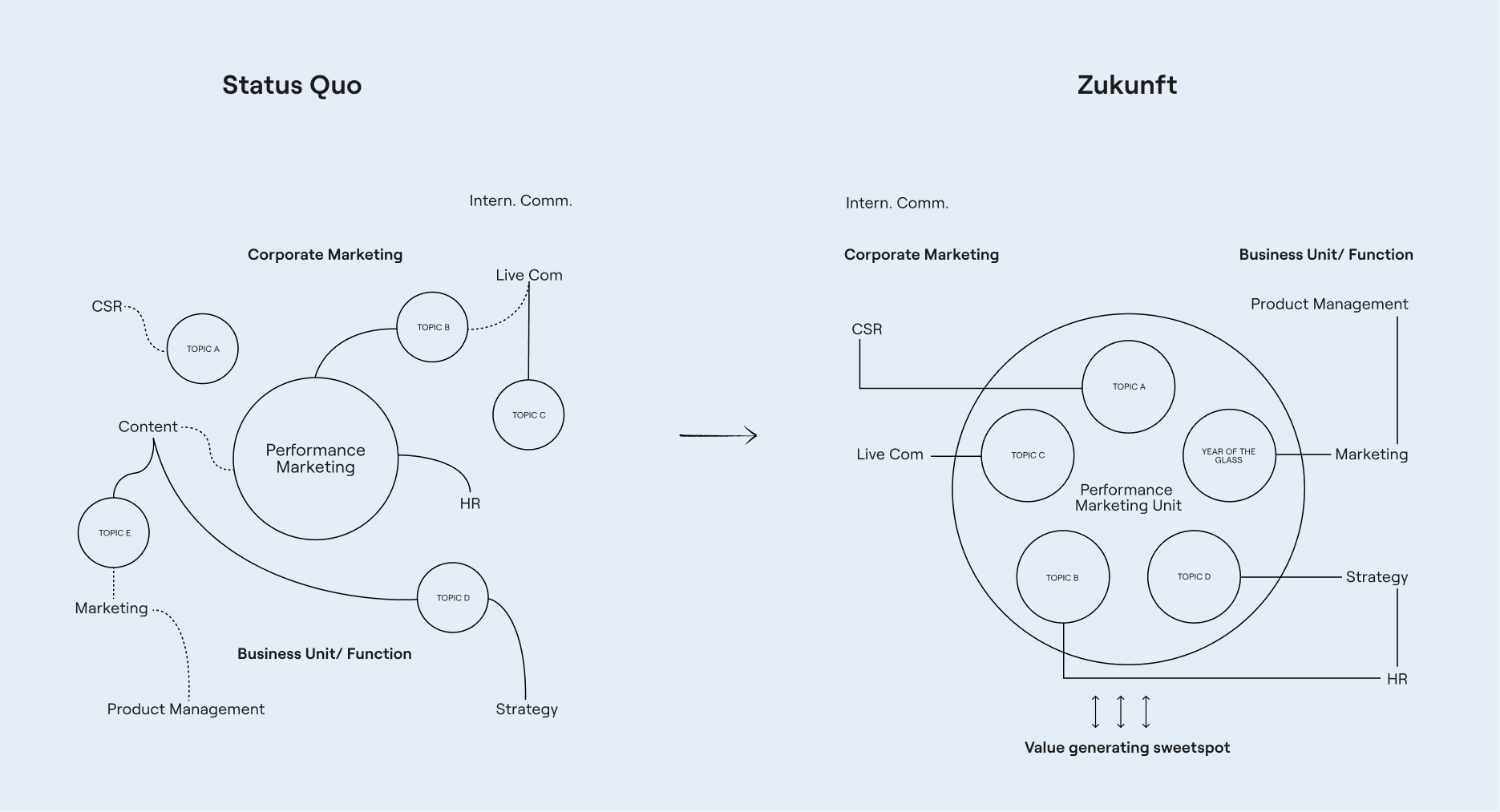
Agile cycles deliver measurable value rather than mere reach
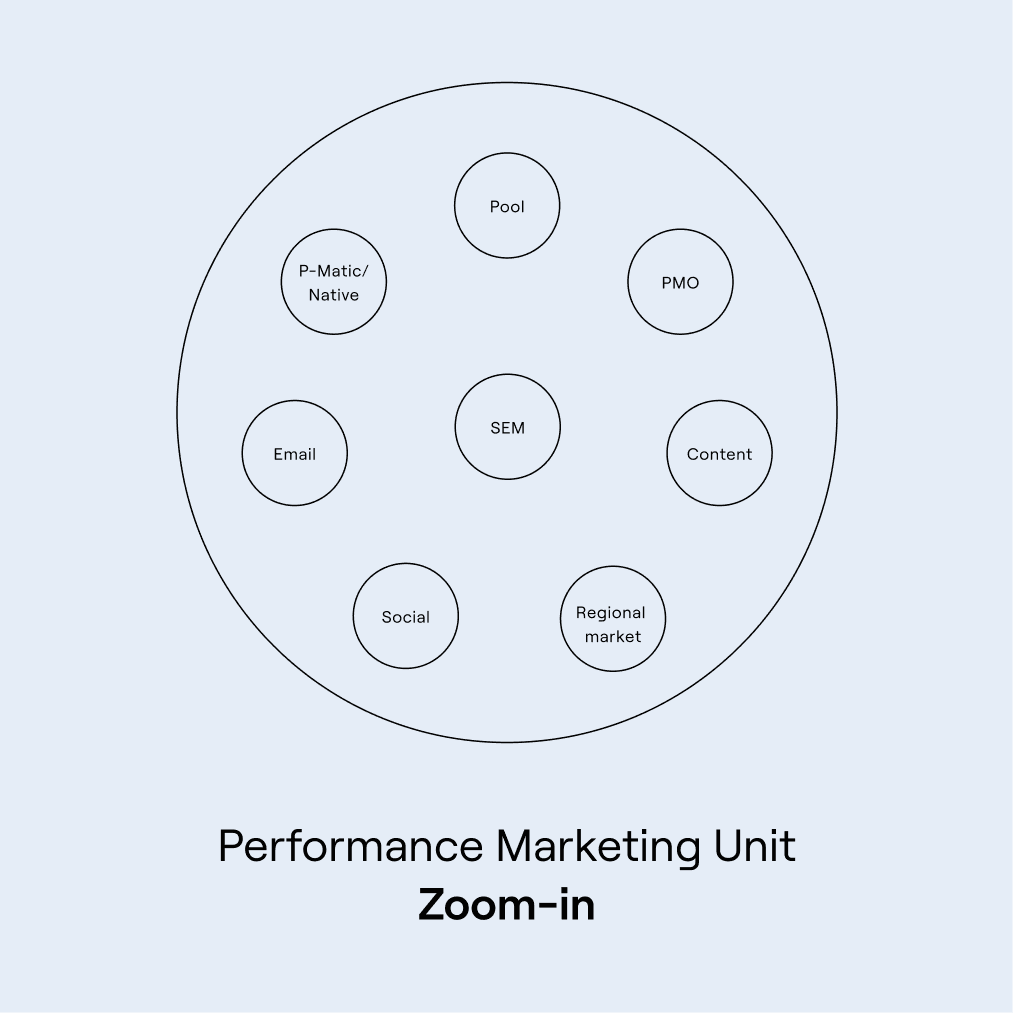
The PMU moved from long planning cycles to agile loops of ideation, delivery, measurement and further development. A Service Blueprint translated the new workflows straight into practice. As a result, the unit became not only faster and more adaptable, but also more effective: instead of pure reach campaigns, business-relevant media strategies now take centre stage, from upper to lower funnel. With clearly defined roles, KPIs and a roadmap, the PMU’s value contributions are measurable and provide a solid basis for strategic decisions across the entire company.

Outcome
The Performance Marketing Unit has a value proposition as a Consulting, Coordination and Execution unit within Marketing, aligning itself internally with the Business Units’ goals and hurdles.
Since the transformation, the PMU plans and works in agile cycles of ideation, execution, measurement and iteration, documented in a Service Blueprint, rather than in long linear planning processes.
Instead of pure reach campaigns, the PMU now prioritises media strategies that connect the Business Units’ upper- to lower-funnel goals.
Clearly defined roles, KPIs and a roadmap give the PMU a structure that allows its value contributions to be tracked within the company.
Our services for a successful transformation
Building the Performance Marketing Unit at SCHOTT was shaped by close collaboration, a clear service orientation and structured organisation design — entirely in line with our design and consulting standard DIaaS® (Design Innovation as a Service).
Stakeholder analysis
Interviews and profiling to capture the requirements and expectations of all relevant stakeholders.
Service Proposition Design
Development of a two-tier, service-oriented portfolio defining clear value propositions for the Performance Marketing Unit.
Role Model Development
Definition of clear responsibilities and role profiles for all core functions within the unit.
Organizational Design
Design of organizational structures and workflows with an interdisciplinary team setup and well-aligned interfaces.
Workshop Facilitation
Design and facilitation of collaborative formats for structured solution development.
Frequently asked questions
How do you position an internal marketing unit so that Business Units see it as a partner rather than a service provider?
The starting point is a stakeholder-centred value proposition. DAYONE analyses the Business Units’ goals and hurdles through interviews and derives from them a clearly positioned Consulting, Coordination and Execution offering, rather than positioning the marketing unit as a mere implementer.
How do you shift an organisation to agile ways of working without completely dismantling existing structures?
Existing structures remain the starting point, not the enemy. DAYONE runs co-creative workshops with the teams involved, builds a shared understanding and turns it into a working model with clear roles and interfaces, rather than imposing a new structure from the top.
How are the value contributions of an internal marketing unit made visible to the company?
Through clearly defined roles, KPIs and a roadmap. They give the unit a shared frame of reference against which progress and impact can be tracked, instead of merely asserting impact.
What role do workshops play in redesigning a marketing organisation?
Workshops are where Corporate Marketing and the Business Units develop a shared understanding before a new structure is set. DAYONE uses co-creative formats so that the future organisation is owned by those involved, rather than merely communicated to them.


Let's move your project forward together!
We look forward to your challenge.