TUI
Digital growth strategy increases visibility, improves conversion and boosts direct revenue
Strategic positioning
Market positioning in the growth segment “Accommodation only”, with a focus on the end-to-end customer experience rather than price or breadth of offer alone.
Time-to-market optimisation
A prioritised roadmap with clear action areas accelerates strategy execution and entry into the new segment.
Organisational buy-in
The strategy was developed in workshops with the TUI teams who would later implement it. That strengthens internal acceptance and increases the execution capability of cross-functional teams.
TUI, Europe’s largest tour operator, aimed to establish itself as a standalone provider in the fiercely contested accommodation-booking market alongside platforms such as Booking.com, focusing on the customer experience rather than price alone. DAYONE developed a digital growth strategy with a prioritised roadmap in a six-week DIaaS® process. The result: concrete initiatives for entering the accommodation-booking segment, developed together with TUI’s interdisciplinary teams.
- Client
- TUI · Europe’s largest tour operator
- Industry
- Tourism / Travel
- Services
- Digital Strategy · Market & Competitor Analysis · User Research · Customer Journey Mapping · Strategy Workshops · Conversion Optimisation
- Outcome
- Prioritised roadmap with concrete initiatives for entering the accommodation-booking segment
Starting point
TUI wanted to establish itself in the European accommodation booking market, which is dominated by platforms like Booking.com, as an independent provider in its own right, without competing purely on price and inventory.
The challenge: differentiation in a crowded market
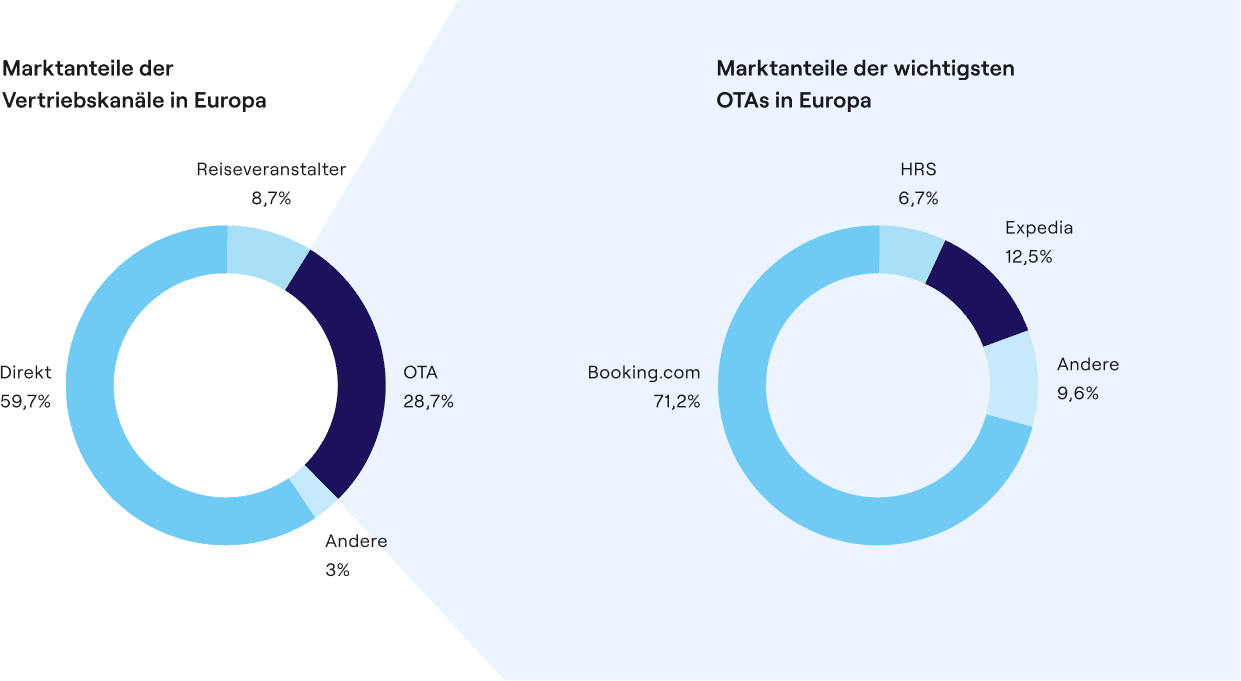
In the accommodation-booking market, platforms with vast choice and low prices dominate. In Europe, according to the market data shown in the case, only 8.7 percent of bookings were made directly with tour operators, and 28.7 percent via online travel agencies (OTAs). Among these OTAs, Booking.com alone accounted for a 71.2 percent market share, compared with 12.5 percent for Expedia and 6.7 percent for HRS. In this environment, it was hard to differentiate on price and range alone, so TUI focused on the customer experience. According to a Google analysis cited by DAYONE, hotel bookings that put the customer experience first generate 22 percent more revenue than purely price-focused offers.
The approach: the entire customer lifecycle in focus
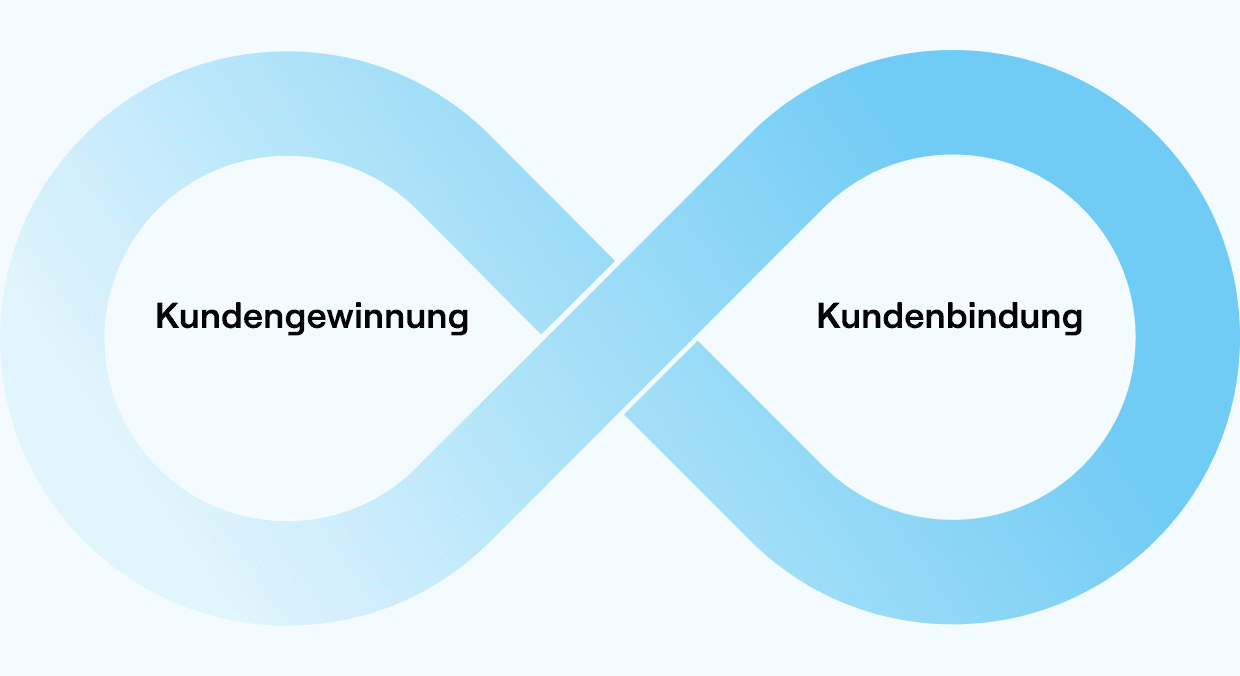
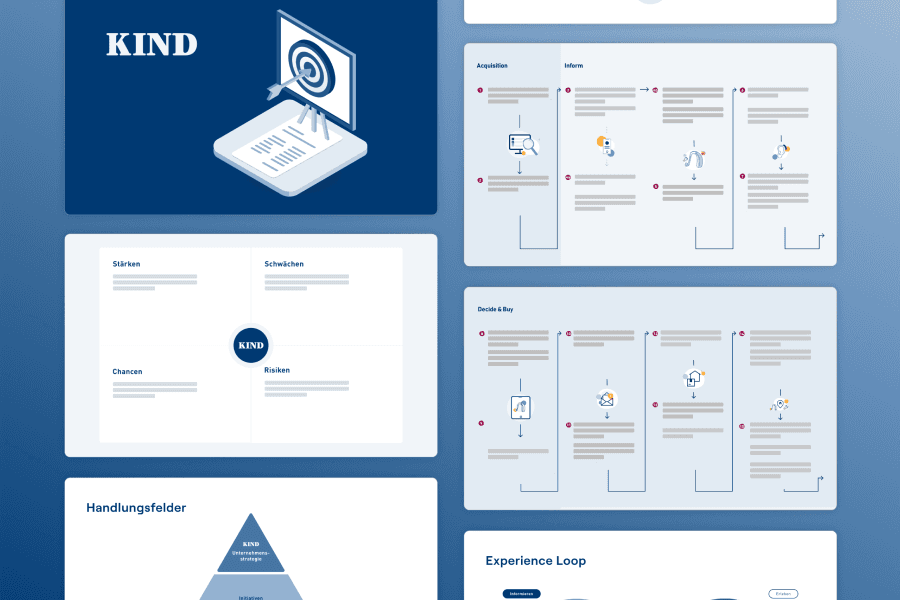
The strategy covered the full customer lifecycle, from acquiring new customers to retaining existing ones. DAYONE therefore aligned the roadmap not only to improve the conversion rate, but also to maximise long-term customer lifetime value. A concept for the TUI app illustrated how inspiration, selection and booking of accommodation could come together in a seamless experience.

Evidence-based and collaborative development in three phases
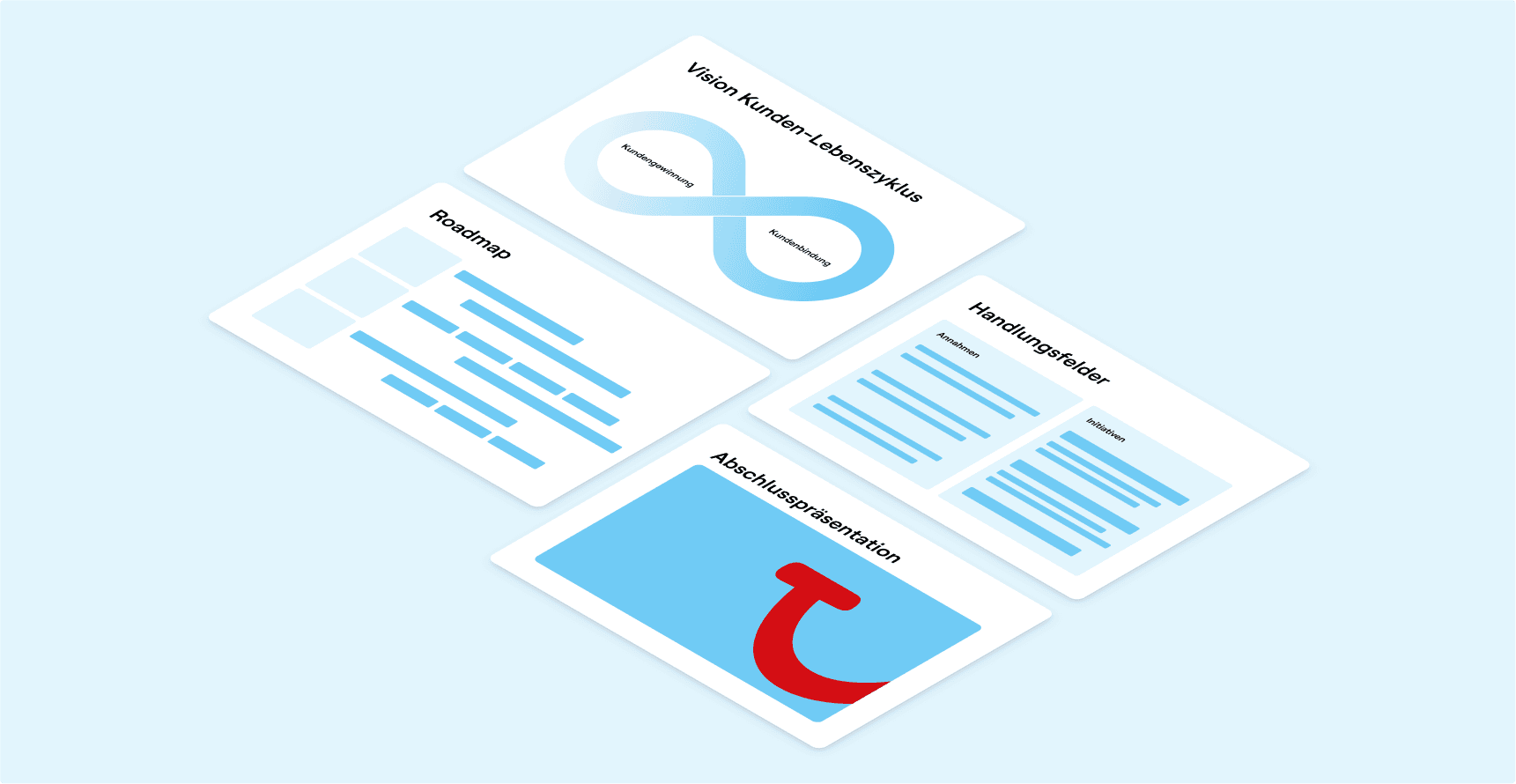
The project followed the in-house DIaaS® standard with three phases: Analysis to generate insights from market, competition and target groups; Ideation to define action areas and success factors; and Concretisation to create prototypes and implementation plans. The outcome was a roadmap with tangible initiatives rather than a generic strategy paper. Workshops with interdisciplinary TUI teams ensured the strategy was not created top-down, but developed jointly. That strengthened internal buy-in and accelerated subsequent delivery.

Outcome
Within six weeks, a three-phase DIaaS® process of Analysis, Ideation and Concretisation produced a prioritised roadmap with concrete initiatives for entering the accommodation-booking segment.
TUI developed the strategy in workshops together with interdisciplinary teams, rather than dictating it top-down.
A strategy in six weeks
With the DIaaS® (Design Innovation as a Service) design and consultancy standard, DAYONE combines collaborative ways of working, strategic thinking and user-centred design. A clear mission, the right experts and openness to new approaches led to a tailored solution for TUI within six weeks.
Market & competitor analysis
In-depth analysis of market trends and benchmarking against relevant competitors to identify potential.
User Research & Customer Profiles
Conducting qualitative and quantitative analyses to develop well-founded target group profiles and relevant customer insights.
Customer Journey Mapping
Visualization and analysis of the entire user journey to identify pain points and optimisation potential along the booking process.
Strategy workshops & Co-Creation
Moderation of interdisciplinary workshops for the joint development of vision, action areas and strategic guidelines.
Strategic roadmap & areas of action
Development of a prioritised roadmap with concrete initiatives and clear responsibilities for rapid implementation.
Frequently asked questions
How does a digital strategy differ from brand positioning alone?
A digital strategy defines the digital channels and products through which a company grows; a brand positioning describes how it wants to be perceived while doing so. At TUI, the two interlocked: positioning in the accommodation-booking segment required a concrete digital roadmap to become actionable.
How can an established provider differentiate against dominant platforms such as Booking.com?
It is hard to achieve that through price and breadth of offer alone, as specialised platforms have structural advantages there. In such cases, DAYONE differentiates through the customer experience across the entire booking journey, from inspiration to repeat booking.
How long does it take to develop a digital growth strategy, as in the TUI case?
In the DIaaS® process, a strategy project goes through three phases (analysis, ideation and definition) before a prioritised roadmap is in place. For TUI, this took six weeks.
How do you ensure a strategy doesn’t just work on paper but actually lands with the team?
What matters is who develops the strategy, not just who is presented with it at the end. Workshops with the future delivery teams create shared ownership from the start, increasing acceptance compared with a finished presentation.


Let's move your project forward together!
We look forward to your challenge.