STRABAG
Gamification and intuitive UX turn a complex subject into an accessible, hands-on experience that boosts visitor engagement.
Positioning through experience:
The Carbon Footprint Game makes STRABAG's expertise in sustainable construction tangible for trade fair visitors.
User experience in focus:
A playful user experience creates intuitive understanding of the complexities of building information modelling (BIM).
Strong brand presence:
The user interface design carries STRABAG's corporate identity recognisably into a digital product.
With revenue of 19 billion euros and more than 77,000 employees (as of 2024), Strabag SE is one of Europe's leading construction companies. As such, it has to meet the challenges of the shift towards sustainable construction.
Together we conceived and designed a trade fair application and supported its technical delivery. It lets visitors calculate the carbon footprint of a construction project and experience STRABAG's sustainability credentials and its expertise in building information modelling (BIM) in a playful way.



The challenge of the construction transition
The construction industry currently accounts for around 38% of global greenhouse gas emissions. To reduce that share in future, developers need to know and optimise the total lifecycle emissions of a project while it is still being planned.
STRABAG relies on building information modelling (BIM), among other things, to take a holistic view of a project's greenhouse gas emissions.


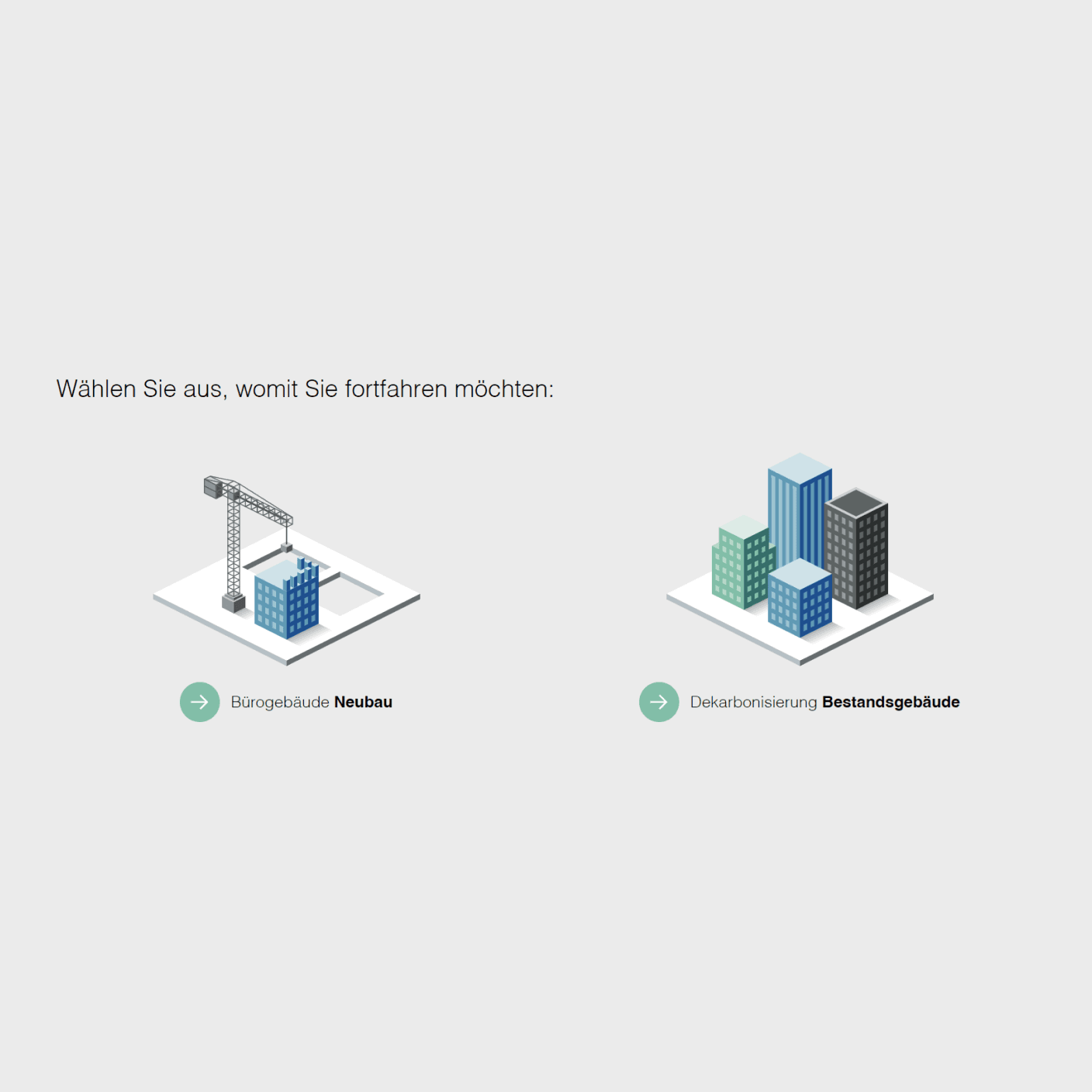
Start
Choosing between a new build and an existing building.

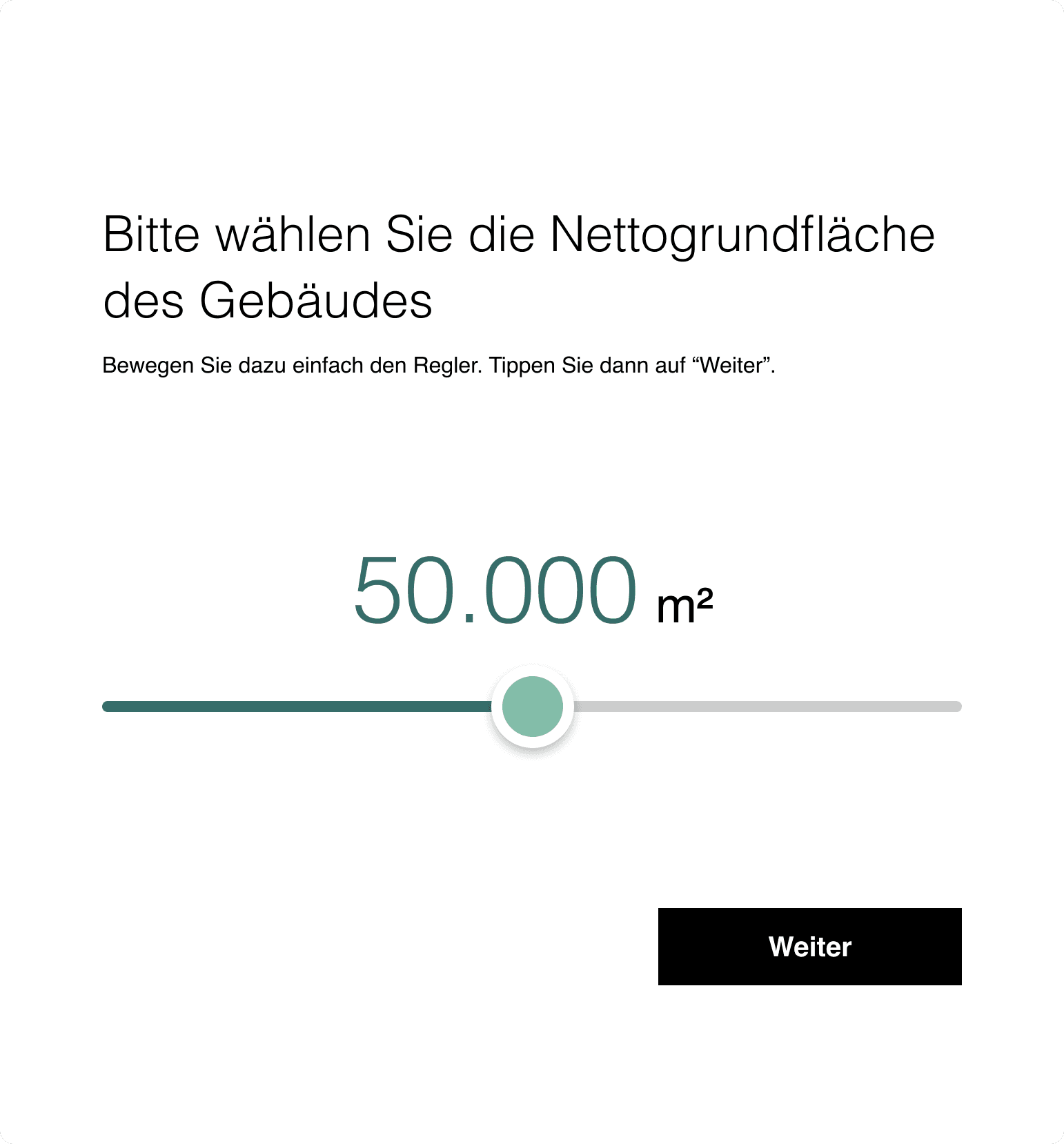
Floor area
The net floor area of the new build is entered on the tablet using a slider.

New build options
Over the next 4 steps, the different construction methods are selected. The results screen shows the energy saving potential in real time.

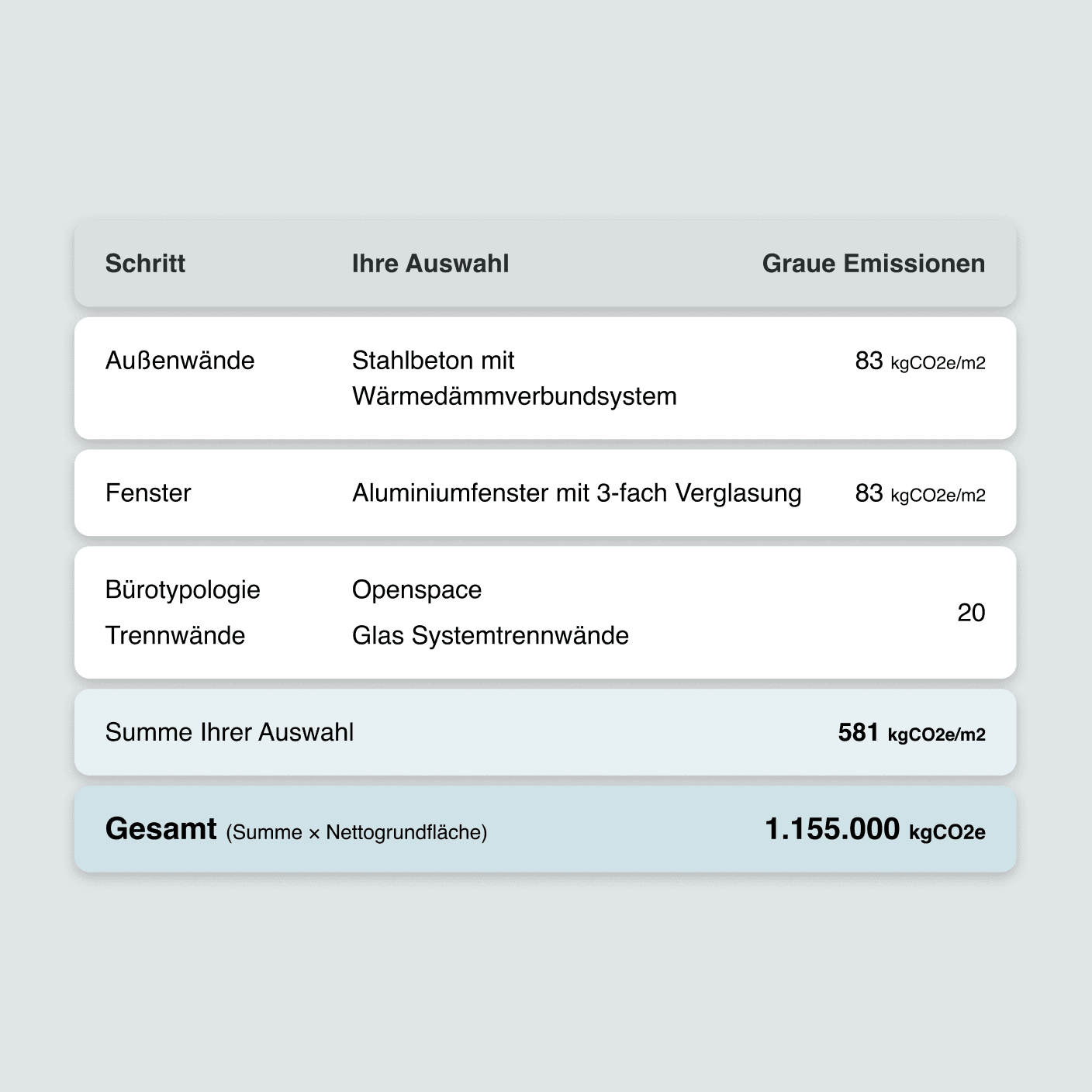
Results
The tablet shows the combined savings potential, while the results screen displays a detailed view with a spider chart.
The STRABAG brand in a digital application
We extended the existing STRABAG brand with digital elements: alongside new colour variants and typographic elements, we created illustrations and interface components that enrich the brand within a digital application and make it recognisable.

Our contribution to the Carbon Footprint Game
With the following services we were able to support the launch of the Carbon Footprint Game as a trade fair application strategically and deliver it operationally — from the initial concept phase to final implementation.
Based on our design and consulting standard DIaaS (Design Innovation as Service).
UX Design
Design of the user journeys for a clear, consistent and user-centred experience.
Digital branding and UI design
Development of digital components based on existing brand guidelines for a forward-looking, consistent brand presence.
Support for the technical implementation
Close collaboration with our technical development partner Hybrid Heroes, plus testing and quality assurance of the application.


Let's move your project forward together!
We look forward to your challenge.