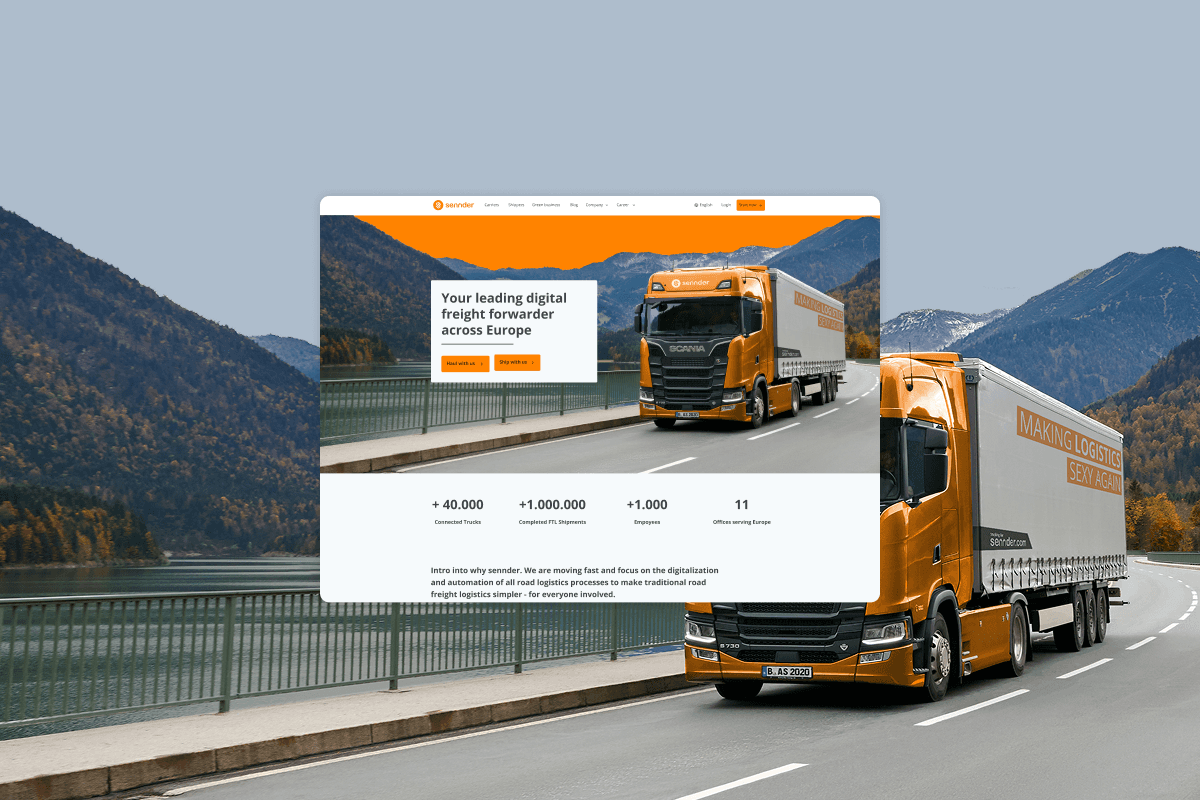
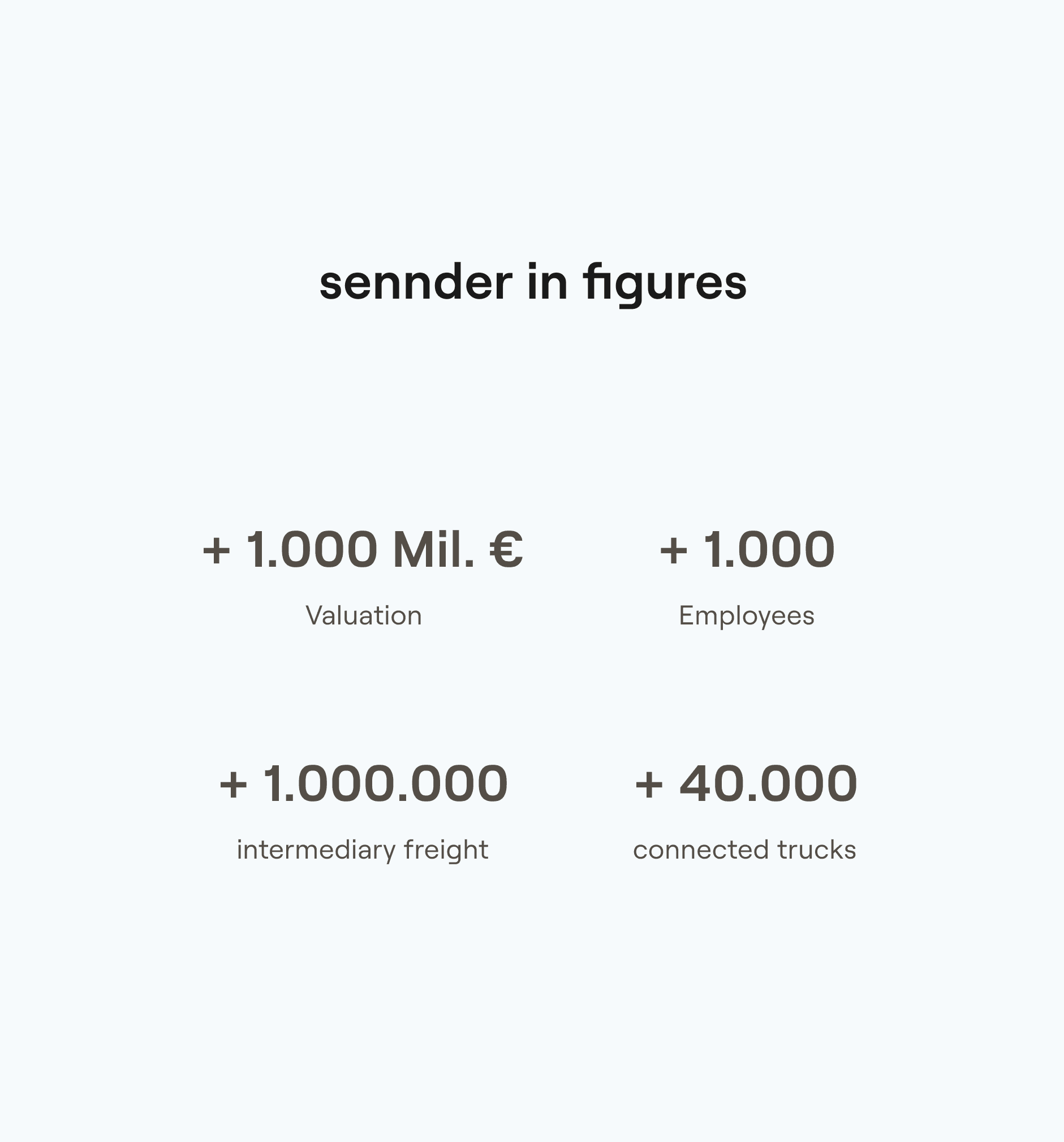
sennder operates Europe’s largest online platform for freight transport, connecting companies that need to ship goods with more than 40,000 carriers.
Together, we optimized the digital experience to accelerate the platform’s growth.
Both shippers and carriers can now navigate more easily, reach their goals faster, and build greater trust in the platform.
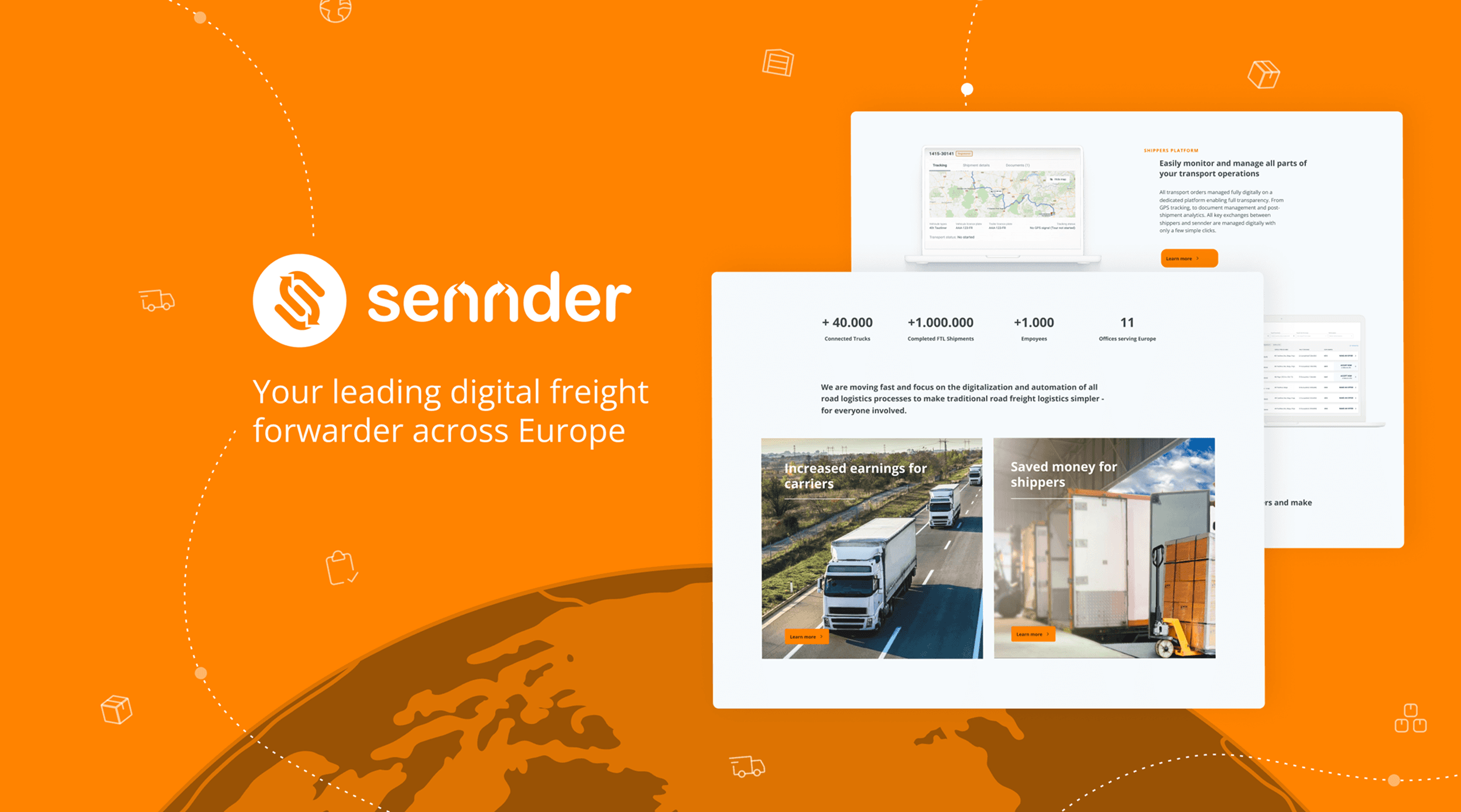
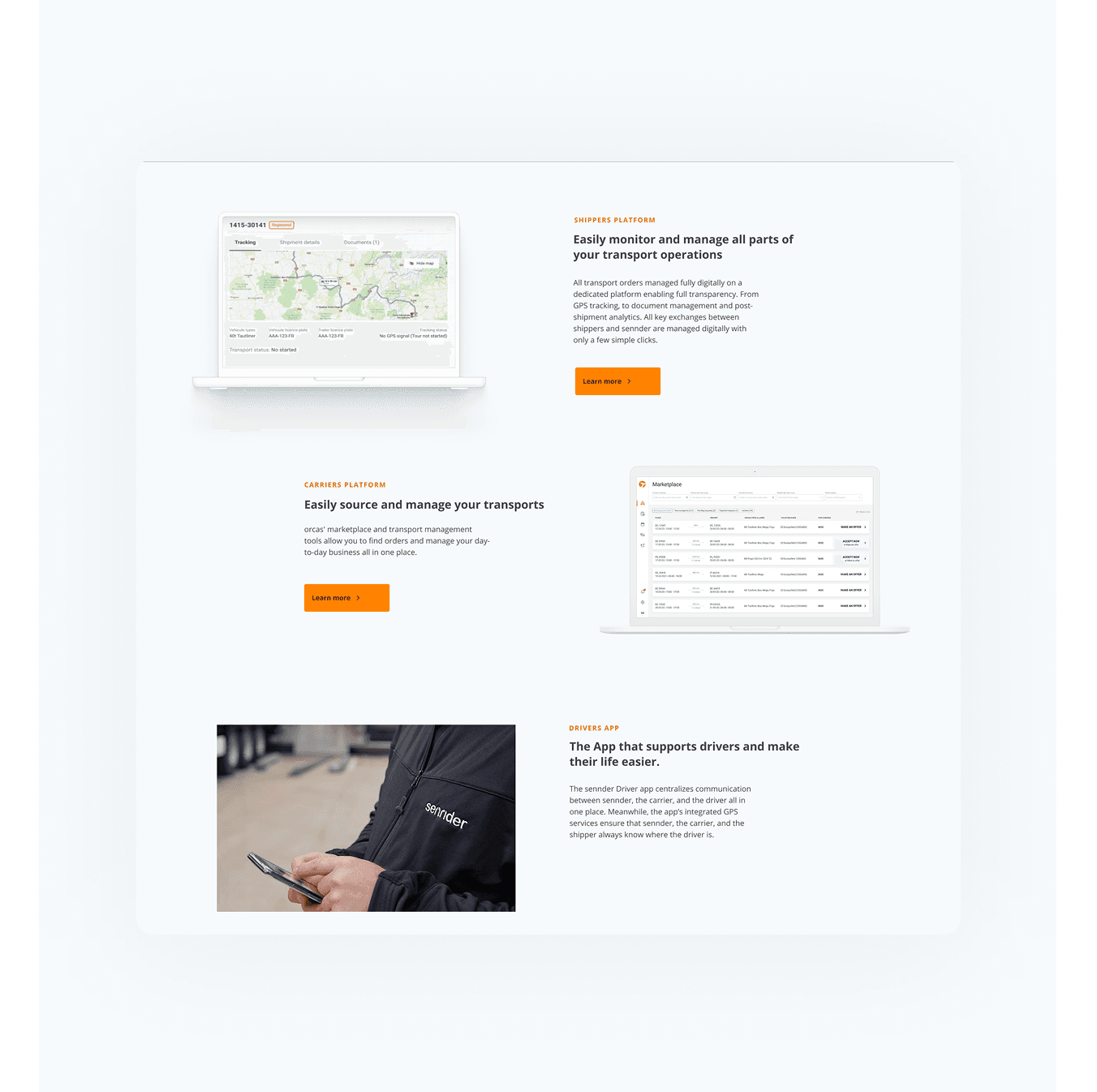
Online platform optimized for two user groups:
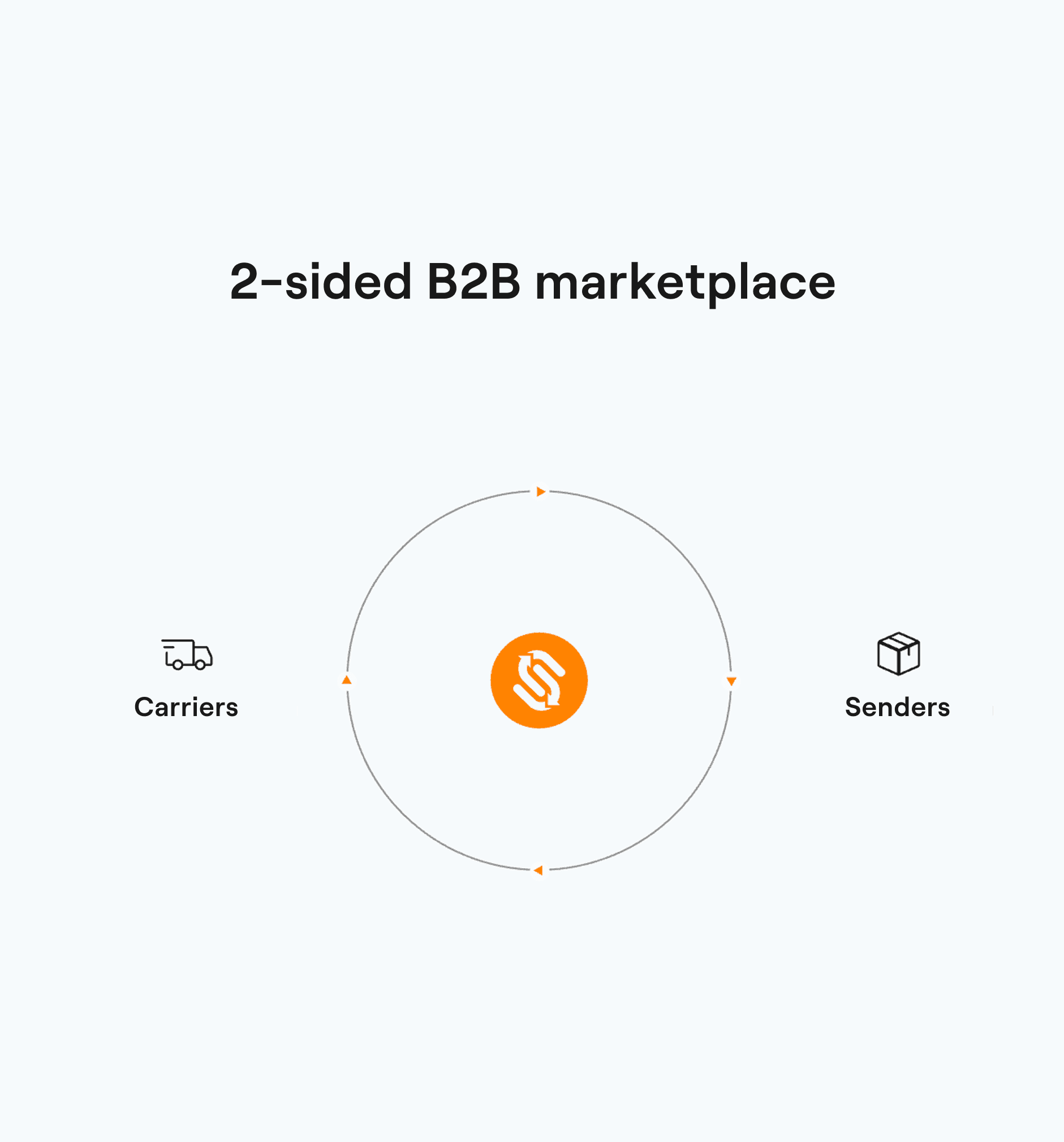
sennder connects shippers and carriers on a single platform - two groups with different needs and decision paths.
A newly structured information architecture with dedicated sections, relevant content, and clear navigation ensures both groups find what they need faster and register more often.
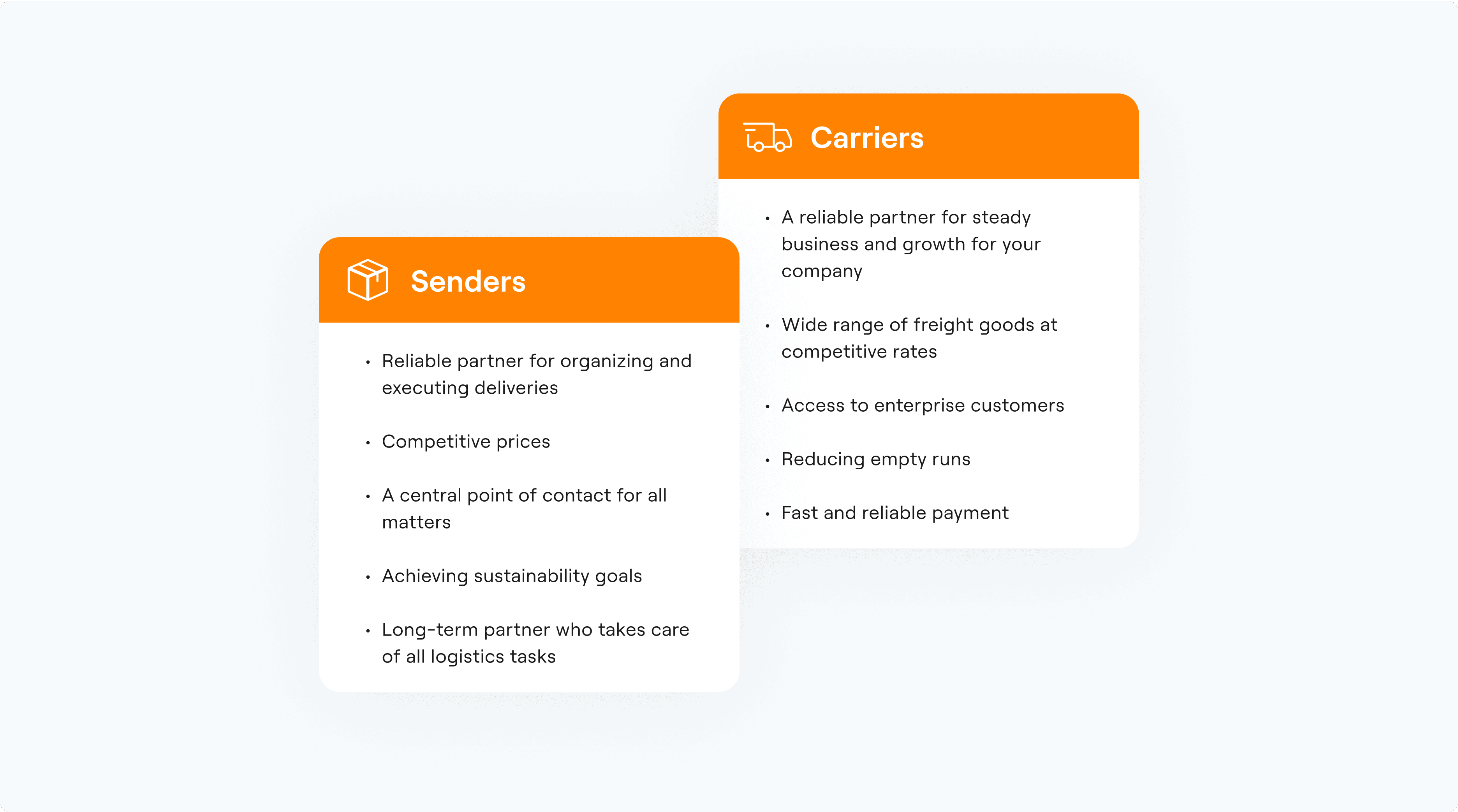
Building trust through a clear presence in a fragmented market
The European freight market is made up of more than 400,000 small carriers and countless shippers. In this environment, trust is essential.
Through clear communication and a design that conveys reliability and transparency, sennder positions itself as a strong, trustworthy partner.
Relevant content, well-structured pages, and clear language create a sense of trust from the very first visit to the website.
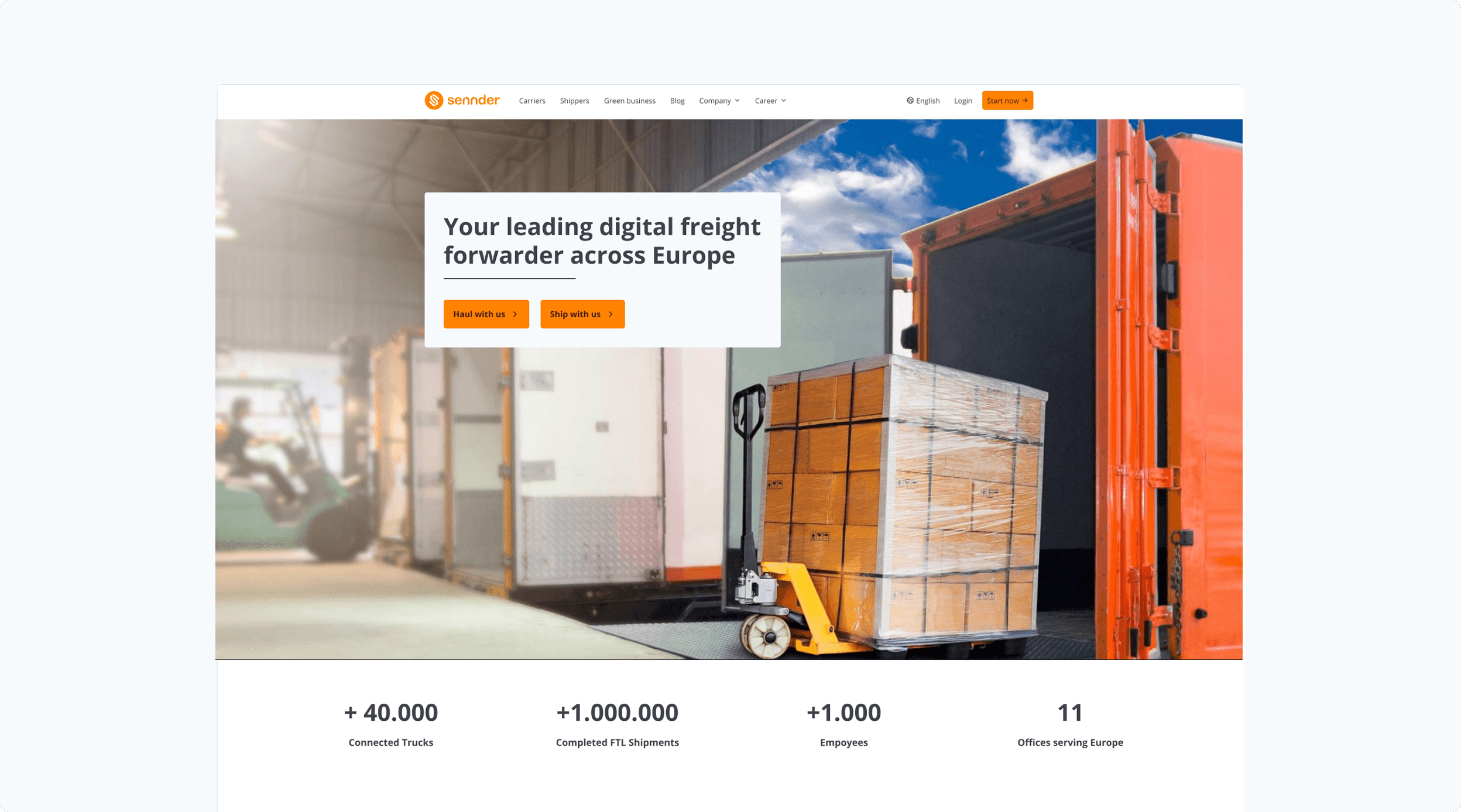


Simplified sign-up process attracts more qualified users.
A key driver of the platform’s growth was a simpler, more user-friendly sign-up process.
By improving registration for both shippers and carriers, onboarding became easier and the number of qualified sign-ups increased significantly.
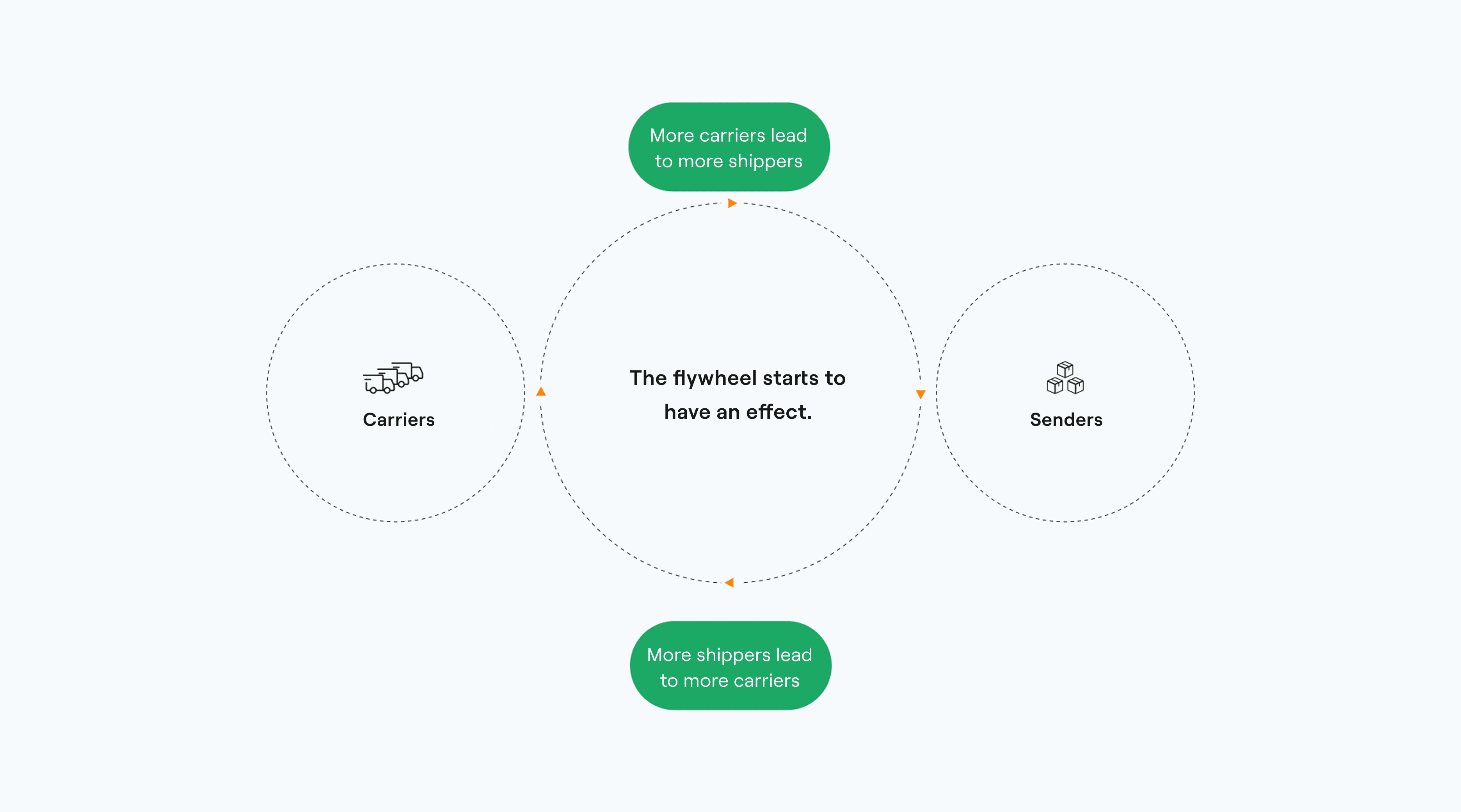
The result: more users on both sides of the marketplace, accelerating the business model’s flywheel and strengthening sennder’s position as the leading provider in digital freight forwarding.
Our services for a successful collaboration
The collaboration with sennder was defined by a clear objective, deep user understanding, and a structured approach - from analysis to measurable results.
User Research:
Workshops and interviews with shippers and drivers to identify key user motivations and needs.
Market analysis:
Analysis of the European freight market and competitive landscape for strategic positioning.
Information architecture concept:
Restructuring of the information architecture with clear entry points, reduced complexity, and purpose-driven user journeys.
Brand positioning & value propositions:
Refinement of the platform’s value proposition through consistent language and design.
UX/UI design and prototyping:
Tested interfaces that guide users effectively toward conversion, as evidenced by increased registration numbers.
Close collaboration and implementation:
Support throughout implementation and continuous optimization up to the go-live.
Current Topics